

The Ice Fishing Game Demo lets you study the game flow before you spend anything, which is useful when you want to see how the feature rounds, symbols, and pacing feel in practice. A demo session is also a clean way to compare your impressions against Ice Fishing Demo results from different visits, since the play environment is repeatable. That makes this page a practical guide for reading outcomes without treating them like guarantees. It also helps you understand where prediction tools can help and where they cannot.
If you have been searching for an Ice Fishing Predictor or trying to understand Ice Fishing Predictions, this page keeps the focus on realistic analysis rather than hype. You will find a walkthrough of demo play, a simple way to think about result forecasts, and a few habits that make session review more accurate. The goal is to help you read the game carefully, not to promise a pattern that always holds. By the end, you should feel more comfortable judging what the demo can and cannot tell you.
50 Free Spins + 100% Match
Spin for free and get your deposit matched instantly
Get Bonus
How the Ice Fishing Game Demo Works Today
The Ice Fishing Game Demo is designed to mirror the real game structure while removing financial pressure from the session. That matters because you can watch how the reels behave, how often special symbols appear, and how quickly the tempo changes after a bonus trigger. A good Ice Fishing Demo gives you enough repeated spins to notice whether your impressions are based on a short burst or on a longer sample. It is the easiest place to begin if you want to learn the game before making any real-world decisions.
A demo session is also the best environment for comparing instinct with observation, because you can restart, pause, and test assumptions without risk. People often use an Ice Fishing Demo Game to see whether the bonus side of the game feels volatile or steady over time. The point is not to chase a perfect read on every spin, but to understand how the game presents its outcomes. Once you know that, later prediction work becomes more disciplined and less emotional.
What should I notice first in a demo session?
Start with the basic rhythm of the game rather than the biggest feature round. In Icefishing Demo, the pace of the early spins often tells you more about volatility than a single standout result. Watch how often the screen changes and whether the game tends to cluster activity or spread it out. Those simple details give you a better foundation than trying to read meaning into one flashy moment.
It also helps to notice how quickly you form expectations after a few spins. A Ice Fishing Demo can make a sequence feel more important than it really is, especially when wins arrive close together. When you slow down and compare several mini-sessions, your notes become more reliable. That habit makes later analysis easier because you are judging patterns instead of reacting to excitement.
How do I turn demo play into useful learning?
Use the session to test one idea at a time, not ten ideas at once. If you are studying the Ice Fishing Game Demo, focus on a single variable such as bonus frequency, symbol spread, or the feel of the early rounds. That keeps your observations clean and easier to compare later. The more targeted your notes are, the more useful the demo becomes as a learning tool.
A short checklist can help you keep the session organized without overthinking it. Record what happened, how long it took, and whether your expectation changed during play in the Icefishing Game Demo. Then compare that note with a second session so you can see whether the same impression returns. Repetition is what turns casual play into a more meaningful review process.
A demo session works best when you approach it in a fixed order, especially if you are using the Ice Fishing Demo to learn the game rather than to guess the next result.
- Open the Ice Fishing Game Demo and watch the first few spins without making assumptions about momentum.
- Note how bonus features appear, then record whether they feel frequent, rare, or clustered.
- Pay attention to symbol changes and any pacing shifts after a win or near-miss.
- Repeat the session once more so you can compare the two sets of observations.
- Keep a short log of what you noticed so your later Ice Fishing Demo Game review stays grounded in evidence.
Once you follow the same process each time, the demo starts to feel less random and more like a practical study tool.
Ice Fishing Prediction Models and Game Result Forecasts

Prediction in a demo environment starts with a simple fact: a slot-style game does not reveal a guaranteed next outcome. The best Ice Fishing Prediction models therefore focus on probability, sample size, and session behavior rather than promises. When people talk about Ice Fishing Predictions, they are usually trying to estimate what a pattern might look like over several spins. That is useful for analysis, but it should never be confused with certainty.
A practical Ice Fishing Game Prediction approach looks at recent samples, compares them with longer play periods, and checks whether a result feels like a normal fluctuation. The value of the model is not that it knows the next spin, but that it helps you ask better questions. Some players also search for an Icefishing Predictor because they want a shortcut, yet the real benefit comes from learning how the data is built. Once you understand the inputs, the output becomes much easier to judge.
Can a predictor really forecast demo results?
A predictor can suggest probabilities, but it cannot remove the uncertainty built into game outcomes. When you use an Ice Fishing Predictor, you are really asking for a structured guess based on available data. That can be helpful if the tool shows its assumptions clearly. It is not helpful if it presents a forecast as though the next spin were already fixed.
This is why the best Ice Fishing Prediction tools are descriptive first and predictive second. They should explain what they used, how recent the sample was, and whether the session data is large enough to mean anything. If that context is missing, the forecast should be treated cautiously. Good analysis makes the limits visible instead of hiding them.
What does a useful prediction model actually measure?
A useful model usually looks at recent outcomes, feature timing, and the spread of wins across a session. In Ice Fishing Predictions, the key question is often whether the game has been running hot, cold, or simply normal. That means the model should care about timing as much as raw counts. A good forecast becomes more informative when it shows the reasoning behind the estimate.
The most useful Ice Fishing Game Prediction setups also compare the current sample with earlier play to check for consistency. If a tool only reads the last few spins, it may react too quickly to noise. If it uses a longer window, it may smooth out real changes. The balance between those two approaches is where the quality of the model is usually decided.
When you review a forecast, these are the warning signs that it may be leaning too hard on a small sample from the Ice Fishing Demo.
- The model makes a very confident statement after only a handful of spins.
- It never explains whether the sample came from one session or several.
- The forecast changes wildly every time you refresh the page.
- The tool sounds certain even though the game outcome is still random.
If you see those signs, treat the result as a rough opinion rather than a solid reading.
- Session review
- Recent demo spins and visible feature timing
- Trend mapping
- Multiple sessions compared side by side
- Outcome logging
- Notes about wins, misses, and feature hits
- Predictor summary
- A tool-generated estimate from the input data
Understanding Ice Fishing Result Prediction Today and Trends
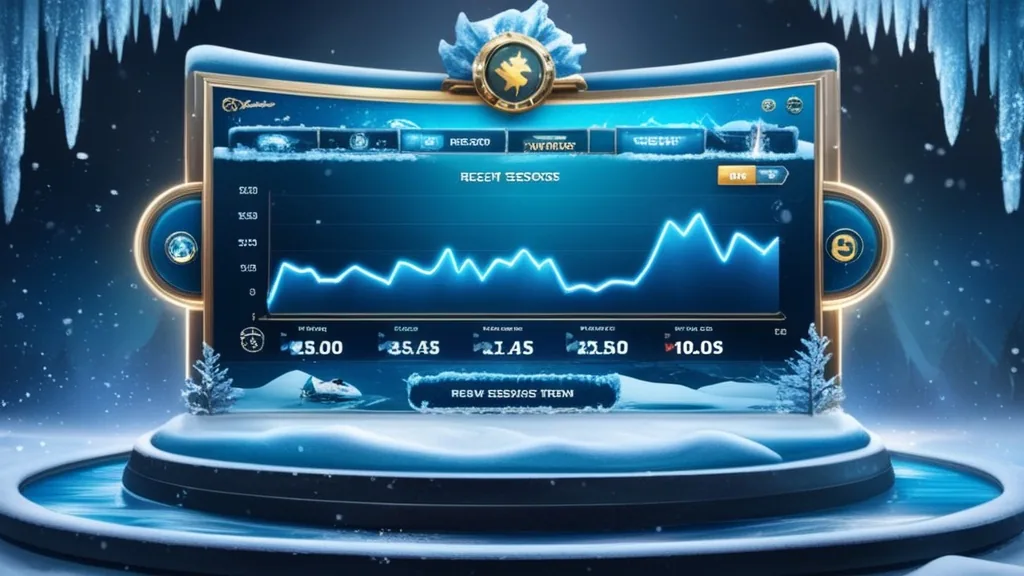
A single session can look dramatic even when nothing meaningful has changed, which is why Ice Fishing Result Prediction Today should always be read with caution. Short-term swings happen quickly in a demo environment, especially when the sample is small. That is also why Ice Fishing Result Prediction is better treated as a trend check than as a promise. You are looking for repeated behavior, not trying to force certainty out of one narrow window.
The current-day view matters most when it is compared with earlier samples from the same game. If a Ice Fishing Game Demo session looks different from yesterday, that does not automatically mean the underlying game has changed. It may simply be the natural movement of outcomes across a limited sample. The strongest reading comes from comparing several sessions and asking whether the differences are consistent or just noise.
Why do short-term results look so inconsistent?
Short-term results are noisy because a limited sample can exaggerate chance clusters. In Ice Fishing Result Prediction Today, a few quick wins can make the session feel stronger than it really is, while a few dry stretches can make it look weaker. That emotional swing is normal, but it should not be mistaken for a lasting trend. The data needs room to breathe before it starts saying much.
This is especially true in a demo because players often run the session differently each time. A Ice Fishing Demo may be opened for a few quick checks one day and a longer exploration the next. Those different habits create very different-looking samples. Before you draw any conclusion, make sure the session length and the pace of play were actually comparable.
Which trends are worth tracking across several sessions?
The most useful trends are the ones that appear again and again across separate play periods. If Ice Fishing Result Prediction shows similar feature timing over multiple samples, that is more meaningful than one isolated lucky sequence. You should also watch whether your notes keep pointing to the same volatility level. Repetition is what separates a pattern from a coincidence.
It helps to track trends in a simple way rather than building a complicated chart too early. When people compare Ice Fishing Predictions across several demo runs, they often learn that the game is steadier than it first appeared. That is a valuable correction because it stops overreaction. Clean, repeated notes are usually more persuasive than a dramatic memory of one session.
Using the Ice Fishing Predictor for Better Demo Analysis

A predictor is most useful when you treat it like a reading aid rather than a verdict machine. The Ice Fishing Predictor should help you organize what you already know from demo play, not replace your own observations. If it shows a pattern, check whether the pattern is supported by actual session notes. That habit keeps the analysis honest and much easier to trust.
The same idea applies to an Icefishing Predictor, even if the tool looks polished or confident. Visual presentation can make a forecast feel more certain than it really is. Good demo analysis means asking what the predictor used, how much data it had, and whether the output changed after fresh spins. Those questions are often more valuable than the score itself.
How do I read a predictor without over-trusting it?
Start by asking what the tool actually measured before you accept the output. A solid Ice Fishing Predictor should make its inputs visible, whether it is reading recent spins, feature timing, or session length. If the logic is hidden, the result should be handled more cautiously. A clean explanation matters more than a confident tone.
You should also compare the forecast with what you personally observed in the demo. When Icefishing Predictor output lines up with your notes, that is a sign the tool may be useful as a shortcut. When it does not line up, the mismatch can be just as informative. Either way, the predictor is serving the review process instead of replacing it.
What settings make demo analysis more useful?
The most helpful setting is usually a consistent session length, because it makes your notes easier to compare. If you test the Ice Fishing Game Demo for five minutes one day and twenty minutes the next, the results will not be easy to line up. Keep the timing similar when you want cleaner analysis. That simple discipline improves the quality of every comparison.
It also helps to use the same starting point when possible, so your Ice Fishing Demo observations are not mixed with different play conditions. Record whether you started fresh or returned to a half-finished session, because that detail can change the feel of the results. When the setup is stable, the predictor and your own notes can be checked against the same baseline. That makes any pattern easier to trust or reject.
Icefishing Demo Game Tips for Reading Outcomes Accurately

Accurate reading starts with discipline, because the Icefishing Demo Game can make small streaks feel larger than they are. If you want a clearer read, slow the session down and treat each group of spins as a separate sample. That approach reduces the chance that one emotional moment shapes your entire view. The cleaner the notes, the easier it is to spot whether a real pattern exists.
A lot of players also benefit from comparing the Icefishing Game Demo with a second session on a different day. That simple comparison can reveal whether your first impression was strong for a good reason or just memorable because it was the first one you saw. Short notes, repeat testing, and calm observation usually beat guesswork. That is the most reliable way to stay grounded when outcomes seem noisy.
What habits help me separate luck from pattern?
The first habit is to stop after a set number of spins instead of chasing a feeling. In Ice Fishing Demo play, a fixed stopping point prevents the session from stretching just because a streak looked promising. That makes your later review much cleaner. It also keeps one lucky burst from dominating the entire memory of the run.
The second habit is to write down what happened immediately rather than relying on recall. A fresh note about the Ice Fishing Game Demo is usually more accurate than a memory from ten minutes later. Include the session length, the rough outcome, and whether the result felt clustered or evenly spread. Those simple details make pattern-spotting more reliable.
How should I record demo outcomes for later review?
Use a short template so each session is documented the same way. For the Ice Fishing Demo Game, record the date, the number of spins, any noticeable feature hits, and whether the session felt above or below average. The template does not need to be fancy. It just needs to be consistent enough for comparison.
After a few sessions, sort the notes by feeling, feature frequency, and result spread. When you compare an Ice Fishing Demo run with two or three others, the repeated details become much easier to spot. That is often where the most useful insight appears. A simple log is better than a vague memory when you want accurate reading.